
Men’s Health • Las Vegas
Testosterone Therapy and Sleep Apnea: What Men Should Know Before Starting TRT
Snoring, tired mornings, and low testosterone are more connected than most men realize.
◆ ◆ ◆
Snoring that rattles the windows. Waking up tired even after eight hours in bed. A morning headache that fades by lunch. If any of that sounds familiar, you are not alone, and it may matter more than you think if you are considering testosterone therapy. Low testosterone and sleep apnea show up together so often that any good TRT plan starts by asking about your sleep. Here is why, in plain English, and what to do about it before your first injection, cream, or pellet.
Sleep apnea means your breathing pauses, over and over, while you sleep. Most often it is the obstructive kind: the airway narrows or closes, the brain wakes you just enough to restart breathing, and the cycle repeats all night. You may not remember any of it. Your partner usually notices first. What you notice is the next day: exhaustion, foggy thinking, a short fuse, and a body that feels older than it is.
Why low testosterone and sleep apnea travel together
The connection runs in both directions, which is what makes it tricky. Much of your testosterone is made during deep sleep, especially in the early morning hours. When apnea chops your sleep into fragments, you get less of that deep sleep, and your body gets less of its chance to make testosterone. Men with untreated sleep apnea often have lower morning testosterone levels for exactly this reason.
It works the other way too. Low testosterone can contribute to weight gain and to changes in the muscle tone around the airway, and both of those can make apnea worse. Add in the fact that the two conditions share the same risk factors, age, weight, and blood pressure, and you can see how easily they form a loop. Poor sleep lowers testosterone. Low testosterone makes sleep worse. Round and round it goes, and treating only one side of the loop rarely fixes the whole problem.
Did you know?
Testosterone is mostly produced during deep sleep. A night broken up by untreated apnea can mean less deep sleep, and less testosterone the next morning. That is one reason fixing sleep sometimes helps testosterone levels before any medication is involved, and why a provider who skips the sleep questions is missing half the picture.
The symptoms overlap, so it is easy to miss
Here is the part that catches men off guard: low testosterone and sleep apnea feel a lot alike. Fatigue, low mood, brain fog, irritability, and a fading sex drive can come from either one. That overlap is why a man can spend a year treating low energy as a testosterone problem, or a sleep problem, and never realize both are in play.
Sleep apnea clues
Signs that point to breathing trouble during sleep.
- Loud snoring most nights
- Breathing pauses noticed by a partner
- Waking up gasping or with a dry mouth
- Morning headaches that fade by midday
- Daytime sleepiness despite a full night in bed
Low testosterone clues
Signs that point to a hormone problem.
- Low energy and low motivation
- Low mood or a shorter temper than usual
- Reduced sex drive
- Trouble building or keeping muscle
- Brain fog and poor concentration
Notice the shared ground: fatigue, low mood, and brain fog appear on both lists. If you recognize yourself in both columns, that is not a reason to worry. It is a reason to get both things checked, because the plan that works is the one that treats what is actually going on.
Can TRT make sleep apnea worse?
This is the question every man considering TRT should ask, and the honest answer is yes, it can. Testosterone can affect the muscles that keep the airway open, and it can raise red blood cell counts, and both of those can worsen breathing pauses in a man who already has apnea. The effect tends to show up most in the first few months of treatment and at higher doses, which is why follow-up matters so much early on.
That does not mean TRT is off the table if you have apnea. It means untreated apnea should be found and treated first, or at the same time, and your provider should keep an eye on your sleep symptoms after you start. For many men, the right answer is both: treat the apnea, then treat the testosterone, and monitor both together. Skipping the sleep check and hoping for the best is the one approach we do not recommend.
“Treating low testosterone without asking about sleep is like filling a tire without checking for a leak. The numbers may improve, but the problem that drained them is still there.”
Lauren Harvey, DNP, APRN, FNP-BC, Luxe Med
What screening looks like before you start
Screening is not a big production. In our Summerlin office it usually looks like this, in five simple steps.
We ask about your sleep. Do you snore? Has anyone noticed you stop breathing at night? Morning headaches, daytime sleepiness, waking up gasping? A few honest answers tell us a lot.
We check your risk factors. Weight, neck size, blood pressure, and age all shape the picture, along with your labs and your health history.
We order a sleep study when it fits. A home sleep study is often enough. You wear a small monitor overnight in your own bed, and it gives a clear severity score.
We treat apnea first, or together. If apnea is found, CPAP or another treatment usually comes before or alongside TRT, not after.
We monitor after you start. Follow-up labs and a sleep check in the first few months catch changes early, while they are easy to fix.
Already using CPAP? TRT can still be an option
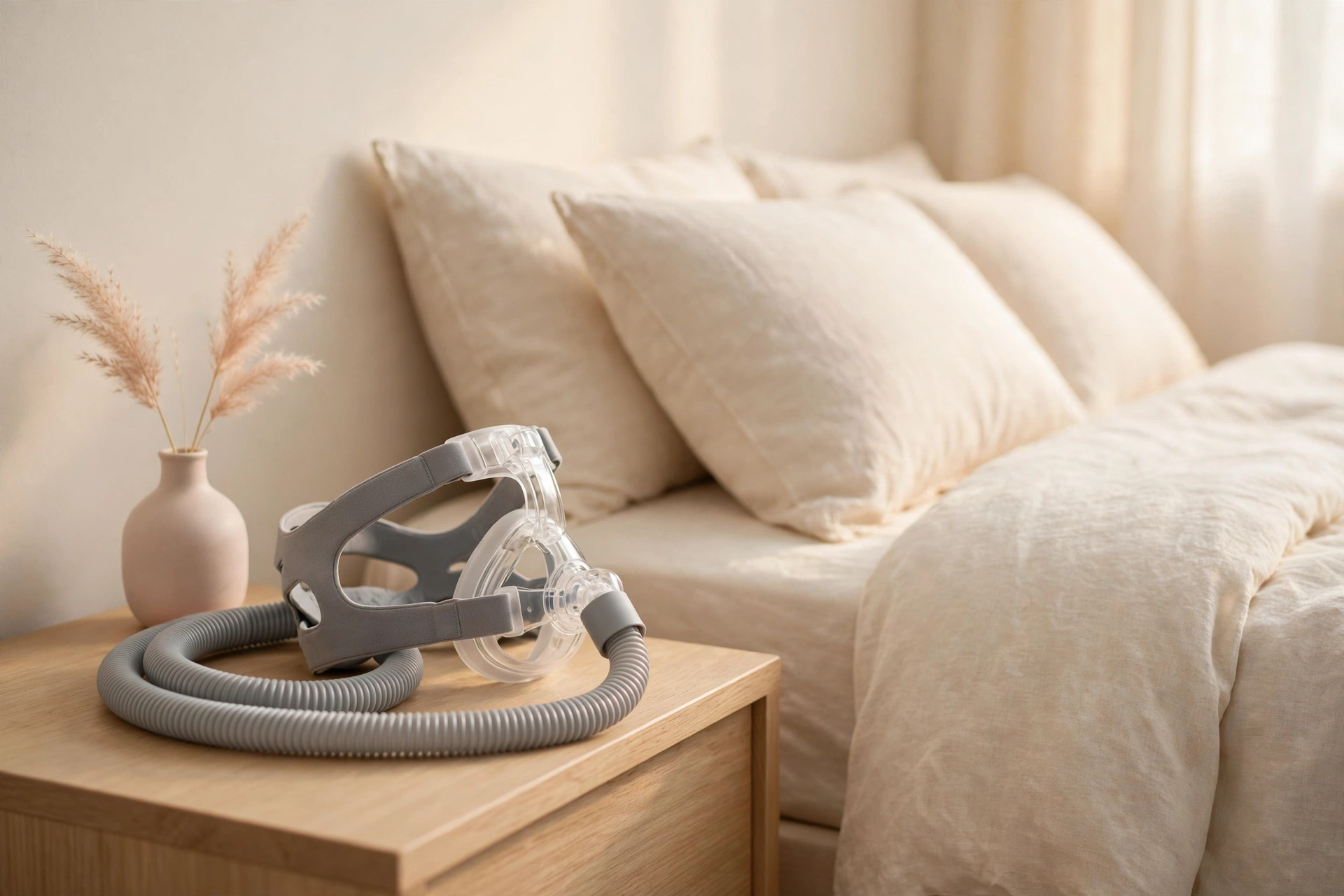
If you already sleep with a CPAP machine, good. You are ahead of the game. CPAP treats the apnea, TRT treats the low testosterone, and many men use both at the same time. Keep using your CPAP every night, tell your provider your apnea severity and how consistently you use the machine, and expect follow-up labs, including testosterone and red blood cell counts, plus a check on how you are sleeping.
The one thing to watch is change. If your snoring gets louder, your daytime sleepiness comes back, or your partner notices breathing pauses again after you start TRT, say so early. A dose adjustment, a CPAP pressure check, or a repeat sleep study can usually sort it out. Small changes caught early stay small.
Myth vs. truth
Myth: If I start TRT, my sleep will automatically get better.
Truth: Some men do sleep better once energy and mood improve, but TRT can also worsen untreated apnea. Better sleep comes from treating the apnea itself, not from testosterone alone.
Myth: Sleep apnea only affects older, overweight men.
Truth: Weight raises the risk, but apnea also affects younger men, lean men, and men with a family history or a narrow airway. Loud snoring alone is worth mentioning to your provider.
Myth: A sleep study means a night in a hospital lab.
Truth: Many men are tested at home with a small overnight monitor. It is simple, you sleep in your own bed, and it gives a clear answer.
“If you snore loudly, wake up tired, or have been told you stop breathing in your sleep, mention it before starting testosterone therapy. A quick sleep check protects your results and your health, and it takes very little time.
What good sleep on TRT looks like
Once apnea is treated and TRT is underway, here is what we hope to see at your follow-up visits. These are the signs the plan is working the way it should.
Waking up rested, most morningsSteady energy through the afternoonCPAP used every night, if prescribed
Snoring that stays quietFollow-up labs on scheduleMood and focus improving, not just energy
Frequently asked questions
Tap a question to open the answer.
+Do I need a sleep study before starting TRT?
Not everyone does, but if you snore loudly, feel tired despite enough sleep, or have risk factors like higher weight or high blood pressure, a sleep study is a sensible step. Many are done at home overnight with a small monitor, and the result shapes the whole treatment plan.
+Can I start TRT if I already have sleep apnea?
Often yes, as long as the apnea is being treated, usually with CPAP, and your provider monitors your sleep symptoms and labs after you start. Untreated apnea is the concern, not apnea itself.
+Will TRT help me sleep better?
It can help energy and mood, which sometimes improves sleep, but it does not treat apnea. If your sleep is broken up by breathing pauses, that needs its own treatment, and treating it often helps your testosterone levels too.
+What should I tell my provider about my sleep?
Mention snoring, breathing pauses, morning headaches, daytime sleepiness, and whether you already use CPAP. That short list, plus your labs, is enough for your provider to decide whether a sleep study makes sense before you start.
If you are thinking about testosterone therapy, your sleep is part of the conversation, not an afterthought. Men across Summerlin and Centennial Hills come to us tired, foggy, and frustrated, and more than a few discover that their nights were part of the problem all along. A quick check before you start, and honest follow-up after, is how TRT works best and safest. We would love to help you sort it out, one clear step at a time.
Ready to talk about TRT and better sleep?
Book a consultation and let us look at your labs and your sleep together.
Book Your VisitCall or text 725-321-8391
7477 W Lake Mead Blvd, Suite 200, Las Vegas, NV 89128